
Speeches and leadership communication
Same Man, Different (non-existent) Lectern.
By Alex McNab · Ghostwriter and former government press officer
Updated 5 min read
A note before you read: I look at political speeches as a speechwriter, for the craft rather than the politics. Whatever your view of the speaker, the techniques are worth studying.
Key takeaways
- A consistent linguistic signature lets people recognise your voice without seeing your name.
- Staging is part of the message: removing the lectern said "a person talking to you".
- Name your first action, make it specific, and make it about values rather than metrics.
- Claiming vindication and offering a confession build very different kinds of trust.
On Friday I analysed Andy Burnham's acceptance speech as Labour leader, and in the comments continued by drawing responses from speechwriting expert Simon Lancaster and body language specialist Martin Brooks.
Today, Burnham officially became Prime Minister and as is tradition, spoke outside No 10. Some may say that this is the hardest speech in British politics. Here’s my thoughts on how he handled his first test.
The Downing Street arrival statement is an unforgiving stadium. It is essentially the speech that allows a nation to decide, in just a few minutes, who you are. On Friday, Burnham had a room full of friends and almost 35 minutes; today he had a street full of cameras, surrounded by Friends and Family behind him, and about five minutes. The question I posed on Friday was whether his conversational authenticity (some may say was his greatest asset in a hall), could survive the most formal doorstep in Britain.
Personally, I think he passed the test. To me he came across as genuine and thus his style sharpened even more seemingly over the course of a weekend.
The lectern that wasn't there
Martin Brooks observed of Friday's speech that Burnham used the podium as a ‘crutch’. Heavily leaning into it, leaving little room for gesture. Today's staging answered Martin emphatically: No lectern at all! Every modern Prime Minister that I can recall easily has arrived to a bespoke lectern, with its design solemnly decoded by the Westminster press pool… yet Burnham spoke at a bare microphone stand, without any notes.
Stripped of anything to hold, he was forced to clasp his hands at most, or gesture deliberately. The Friday vocabulary returned in miniature: short, sharp points on commitments; open, giving hands on the inclusive lines. The same gesture-to-message congruence I noted in the hall. There was a slight sway, the body's natural self-regulation when nothing is holding it still, but the delivery was noticeably cleaner than Friday's.
There's clearly a deliberate messaging behind the staging too. The lectern is the symbol of the office addressing the country, while a simple microphone is a person talking to you. For a leader whose entire argument is about taking power out of the grand institutions and into ordinary places, removing the furniture of authority from his first act as Prime Minister is very strategic and deliberate.
His fingerprint
Simon Lancaster spotted the signature on Friday: the alliterative cluster of ‘people, party, power, politics.’ Today it continued to structure his whole statement. Politics made to work, Power carried into every Postcode, Public Procurement, problem-solving over point-scoring, purpose and positivity in the close. The antithesis "more about problem-solving than point-scoring" appeared verbatim from Friday.
When a rhetorical pattern manages to survive a complete change of format, audience and stakes, it stops being simple decorative style, and becomes more about your individual identity. Leaders and founders should take note, that a consistent linguistic signature is what instantly allows an audience, and eventually a whole organisation, to recognise your voice without seeing your name. Burnham now has one I feel.
Friday's five promises, meanwhile, dissolved as a clear list but survived as themes. We had honesty, collaborative politics, a distinctly Labour economy, leadership for every place, devolution.
An hour apart, a world apart
The day's true study in contrasts came very clearly as we had double the amount of Leadership Speeches to observe in a matter of an hour or two. At mid-morning, Keir Starmer delivered his farewell and opened with a remarkable claim: "My work is done." His speech was a ledger: past tense, first-person, achievements itemised, closed with a genuinely well-made tricolon: "I go with good grace, I go with a smile, and I go proud." Understated to the end. Whatever one's politics and views on his communication and charisma, I saw this as a disciplined exit from a disciplined man.
An hour later, his successor opened by numbering himself among the wreckage: "the 6th person in the last 10 years to walk up this street, the 7th Prime Minister since 2016." Where Starmer exempted himself from the era's instability, Burnham filed himself under it. But then the tense flipped. He spoke of "We Will" as a drumbeat through the speech's spine, and the device that defined Friday returned in the least likely setting: an apology, on the day of his triumph. "We have not been good enough, and we need to be better. We will be.".
Side by side: the departing leader claimed vindication, with the arriving one offering a seemingly genuine confession. I'll leave you to judge which builds more trust, but multiple years of research and writing on leadership communication has a fairly settled view.;)
The speech's most sophisticated device was its simplest: "I will soon go through that door behind me and issue my first instruction: to end rough sleeping in our country." A concrete act that was very cleverly staged inside the speech itself, converting rhetoric into action immediately our eyes (while of course also importing his Manchester attempts to solve homelessness directly into 10 Downing Street and the national rollout). First actions are remembered when first speeches are forgotten. Every new leader taking over a team should steal this: name the first thing you will do, make it specific, and make it about values rather than metrics.
The verdict
On Friday I wrote that the test would come on Monday, outside the world famous black door. Personally, it did. Same fingerprint, but with much stronger architecture.
I think (and I may be proved wrong), that in Burnham we have a communicator who knows exactly who he is, and has now shown he can be that person in any situation and register. The next test will be whether "a circuit breaker for Britain" (today's headline metaphor), survives actually running the country!
Frequently asked questions
What is a linguistic signature?
It's the recurring pattern in how someone speaks or writes, such as a favourite structure, rhythm or set of sounds. When it survives a change of format and audience, it stops being decoration and becomes part of your identity. That's a big part of what I try to capture for ghostwriting clients.
How should a new CEO open their first speech to staff?
I'd suggest naming the first specific thing you'll do, tying it to your values, and then doing it straight away. First actions tend to be remembered when first speeches are forgotten.
Does staging really matter in leadership communication?
Yes, I think more than most people expect. Where you stand, what you hold and who is behind you all say something before you've spoken a word.
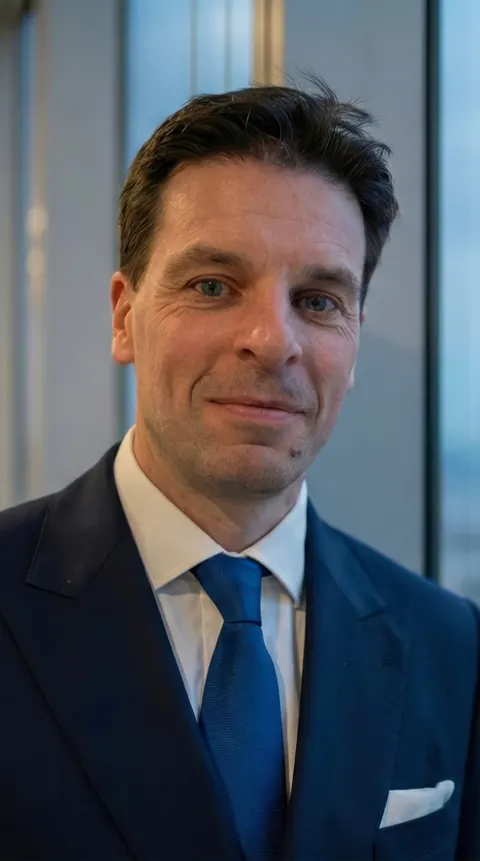
Alex McNab is a Stockholm-based ghostwriter and communications strategist. He has worked in the No 10 press office and the Cabinet Office, and in-house at Maersk, SimCorp and Handiscover. He writes LinkedIn posts, articles and speeches for founders and senior leaders.
An earlier version of this piece first appeared on LinkedIn on 20 July 2026.