
Speeches and leadership communication
"We Win By Being Us": What Andy Burnham's first speech as Leader tells us about how he'll Lead
By Alex McNab · Ghostwriter and former government press officer
Updated 6 min read
A note before you read: I look at political speeches as a speechwriter, for the craft rather than the politics. Whatever your view of the speaker, the techniques are worth studying.
Key takeaways
- Credit a predecessor through one specific shared achievement, not a general thank-you.
- Rhetorical questions (hypophora) let your audience complete the argument, and own it.
- Defining yourself by what you won't do ("We win by being us") can sharpen a founder's positioning.
- Authenticity is not a substitute for structure. Endings matter.
I watched Britain's next Prime Minister deliver his Leadership acceptance speech today with both a ‘Leadership Comms’ eye, as well as former Cabinet Office communications team insider's eye. What can leaders and founders take from it, and what did it signal about the Burnham government and his leadership style that will begin on Monday.
Personally I think that acceptance speeches can be the most revealing in political communication. There is not usually any set opponent to attack, and no legislation or policies yet to defend. Just a single person telling us, either literally or figuratively, who they intend to be. Andy Burnham's speech at Congress House today was, structurally, your classic ‘restoration’ address. Gratitude, tribute, his origin story (that we’ve already heard plenty of in these last weeks since he became an MP). It was of course diagnosis, confession, programme, and credibility. But also, I think the choices that he (or his speechwriter) made inside that structure also deserve some close reading.
The origin story did triple duty
Burnham anchored his entire political journey in one moment: Anfield, April 2009, when the crowd's reaction forced him to confront how the country had treated working-class communities. As a rhetorical choice this is very clever. It gave him an emotional origin that no rival can really contest; it ties him to the Hillsborough Law which was passed just this week. (This sort of relevance and timing is what the ancient Greeks called kairos). It also cleverly let him honour Keir Starmer not just out of obligation but through shared history, recalling how they drafted the original bill together. He praised the man he effectively displaced by making them co-authors. That is elegant unity work, and I think that any founder or leader who is managing succession should study it. If you can, try and credit your predecessor through a specific shared achievement.
The speech's real protagonist was "power"
I haven’t run a specific word-frequency exercise on this speech, but one word stood out for me… Power. It was used against communities, stripped, drained away, centralised, privatised, surrendered, and finally taken back and given "to the place where you live." Power, if I can be allowed to use a Fiction writing comparison, is the protagonist of this ‘story’, and if so, its own transfer is the plot. Very notably as well, the usually expected technocratic vocabulary of the previous era, i.e. Growth, Fiscal, Security, was almost entirely absent. When a leader changes their register this decisively, it signals the real ‘change’ that he also spoke so much about.
The devices worth stealing
So if you’re looking at this speech as an example of ways you can echo this style in your own Leadership Communications, what should you try and mirror?
Places. They were abundant. The steelworks of Sheffield, Scunthorpe, Port Talbot and Teesside; the coalfields of South Wales, Scotland and the North; the mills across the Pennines; the shipyards of the Clyde and Tyne. This is accumulatio in the grand Labour hymnal tradition. I think, quite likely, deliberately Kinnockian. And then, in a piece of staging that no speechwriter could resist, he thanked Neil Kinnock in the room as the man whose rhetoric brought him into the party in 1985. Very deliberate and a real signal as to how he will communicate as he enters No. 10.
Questions as arguments. Rather than just asserting the case for devolution, Burnham asked it via rhetorical questions. ‘If a community doesn't control its own bus service, how can it connect people to opportunity?’ Three such questions in sequence. When the audience is the one who completes your argument, it allows them to take ownership of it. This device, ‘hypophora’ I think is so under-used in business communication, which is a shame because it can be so powerful when used right.
Slogan appropriation. The most quotable moment in my opinion: ‘The right told people to ‘take back control’, yet they were the ones who gave it away’. Stealing your opponent's emotional language and re-pointing it is slightly high-risk given the growth of Reform right now, but it also has the potential to be high-reward. Here I think on the whole it it worked well because he attached it to a 40-year argument, not a cheap jibe.
Definition by negation. Labour, he said, would not try to out-green the Greens, or out-Reform Reform, or wear Tory clothes: "We win by being us." Founders drowning in competitor-matching can learn a lot about USP ownership and identity from this.
Confession as licence. Twice, Burnham did something that we rarely see in victory speeches: he apologised. "Have we been good enough for them?" And later: "I'm sorry where I've fallen short."
The imperfections were as revealing as the craft
Two observations from watching the delivery live. First, 5 promises rather than the classic three. It seemed odd to me, but then again, while it lacks the classic device. Lacks the rhythm and recall… it does signal a clear governing framework over a chant. Of course it also, consciously or subconsciously, echoes Blair's five pledges of 1997. Remember this was a speech to the Labour party rather than the British Public, and so many of the in person audience will recognise this. The test I think will be repetition….if these five continue and thus structure every major speech for him in the next 6 months, it was likely his whole strategy; if they vanish, it was just a list.
Second, an interesting delivery arc. I spotted. Burnham tracked his script closely in the opening third, but then gradually grew in confidence across the 20-25 minute speech. He engaged the room more, which was good, but he also paid for it in fluency, drifting by the end into a looser, more conversational register, and then closing on warm personal anecdotes rather than a crafted crescendo. He never flustered mind you…but audiences potentially remember endings, and the speech lost a little altitude in my eyes precisely where it needed to gain it. The lesson for every leader… ‘down to earth’ and ‘authenticity’ is not a substitute for architecture.
What to expect from Prime Minister Burnham
Restoration. The repeated promise was that he will return Labour to what is. Burnham will be a devolver by conviction who 100% will measure himself on more power transferred out of Westminster, vs. announcements and statements made from it. But away from the specific political agenda he’ll set over the Summer and we’ll hear more of in September, he will, I think, be a communicator whose greatest asset and greatest risk are the same…An authenticity built on staying "close to the ground"… but that must now survive what is usually the most formal lectern in Britain.
That first test likely comes Monday, when he takes his place outside the world famous black door.
Frequently asked questions
What can business leaders learn from political speeches?
In my experience, quite a lot, as long as you leave the politics aside. Political speeches are stress-tested in public, so the devices that survive (structure, repetition, a clear ending) tend to work in a boardroom or on a stage too.
What is hypophora?
Hypophora is asking a question and then answering it, or letting the audience answer it in their heads. I think it's under-used in business communication, and one of the easiest ways to make an argument feel shared rather than imposed.
How should a new leader thank their predecessor?
Specifically. Burnham credited Keir Starmer through a law they had drafted together. For a founder or CEO taking over a team, naming one concrete thing you built together lands far better than general thanks.
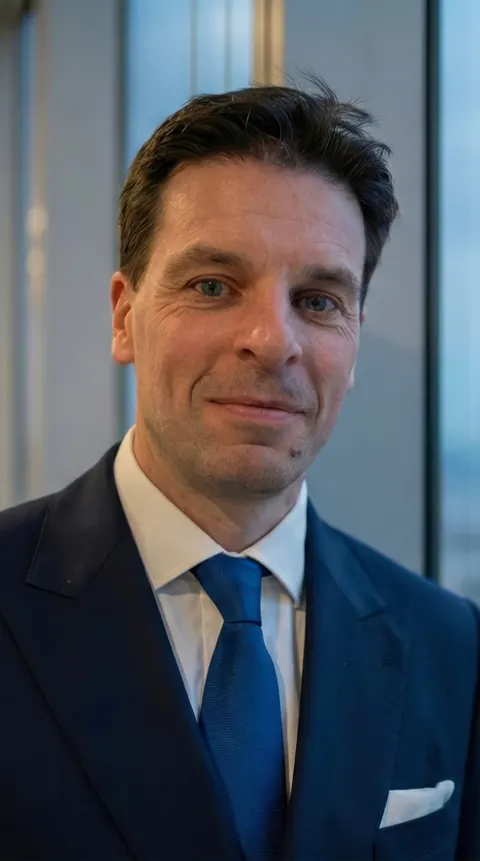
Alex McNab is a Stockholm-based ghostwriter and communications strategist. He has worked in the No 10 press office and the Cabinet Office, and in-house at Maersk, SimCorp and Handiscover. He writes LinkedIn posts, articles and speeches for founders and senior leaders.
An earlier version of this piece first appeared on LinkedIn on 17 July 2026.